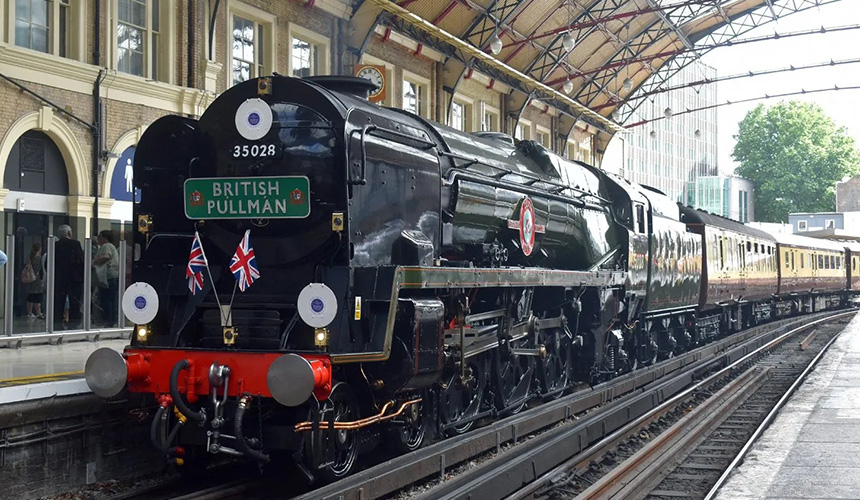
British Pullman: Some journeys begin the moment you step aboard
There is a reason people speak about their luxury train journey for the rest of their lives. It is not a way of getting from A to B - it IS the destination itself. And yet the concept raises as many questions as it does curiosity. We have answered the most common ones, so you can decide whether the rails are calling your name.
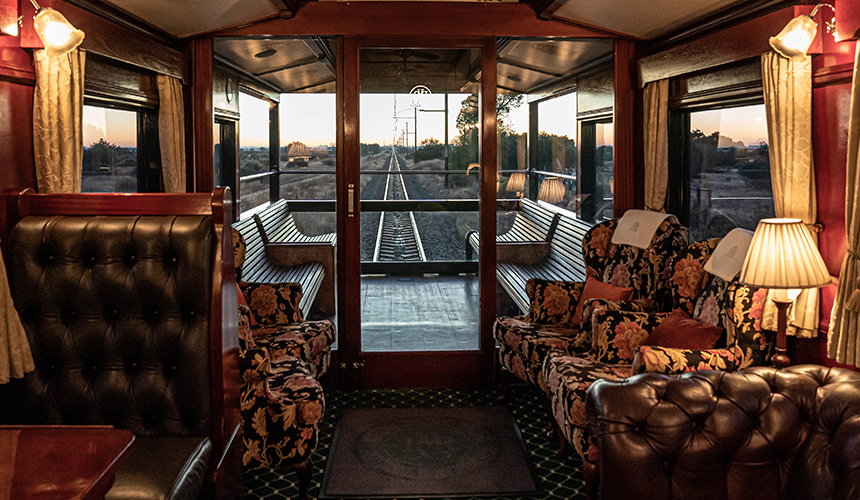
Rovos Rail: Pride of Africa
The Cost - and What It Really Means
Q: Why are luxury train journeys so expensive?
We hear this first. And it is the right question to start with, because the honest answer reframes everything that follows: you are not buying a seat. You are buying an experience that could not otherwise exist.
Consider what is woven into the price before the locomotive even moves:
- The carriages themselves. Many, like those on the Venice Simplon-Orient-Express, are original 1920s Art Deco wagons-lits, painstakingly restored over decades - the marquetry, the brass fittings, the hand-stitched upholstery. On India's Maharajas' Express, each cabin is a contemporary suite of art and engineering. This is craftsmanship, not decoration.
- Capacity is intentionally limited. The Royal Scotsman carries as few as 36 guests. The Maharajas' Express carries 88. Small numbers mean costs are never diluted across hundreds of passengers - and that every guest is genuinely attended to.
- The all-inclusive hospitality model. Fine dining, premium wines and champagne, guided excursions, butler service, cultural programming - this is typically all built into the fare.
- The routes themselves. From the Indian subcontinent on Palace on Wheels to the South African wilderness aboard The Blue Train, these journeys pass through landscapes and territories that are simply inaccessible by any other means.
✦ Add up business-class flights, five-star hotels, private guides, fine dining, and exclusive access experiences along the same route. A luxury train often compares very favourably - and delivers something none of those separately ever could.
Q: Is the price justified compared to flying and staying in luxury hotels?
Let us break it down. On a typical 7-night journey through India or Europe, the equivalent costs would include: business-class flights, four to seven nights in five-star properties, premium dining each evening, curated private excursions, all transfers, and the guides who make it coherent. Then add what money cannot assemble at all — a candlelit dining car drifting through the Rajasthani desert at dusk, the particular community of fellow travellers, the ritual of dressing for dinner on a moving train.
The luxury train does not just match this itinerary. It transcends it.
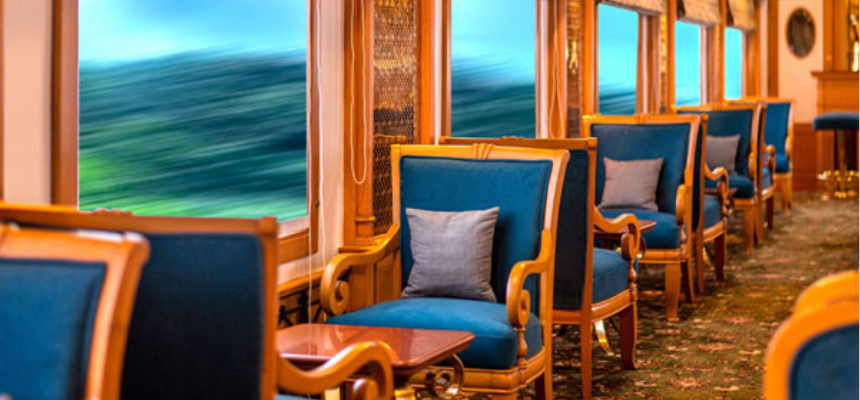
Deccan Odyssey: Every meal a celebration of the region you are passing through
What Is Included
Q:. What exactly is included in the fare?
The biggest misconception is that a luxury train fare is an expensive train ticket. It is not. Most fares include:
- Private en-suite cabin or suite accommodation
- All meals - breakfast, lunch, afternoon tea, and multi-course dinners - crafted by accomplished onboard chefs, often with regionally inspired menus
- Premium wines, champagnes, and curated beverages throughout
- Off-train guided excursions - private vineyard visits, game drives, heritage monuments, temple circuits
- Transfers at journey start and end points (on most trains)
- Onboard entertainment: live music, expert talks, cultural programming
- 24-hour cabin steward or butler service on most trains
Always ask our luxury travel specialists to walk you through the inclusions day by day - the detail is where the value becomes visible.
Q: Is in-cabin dining available?
Dining in the restaurant car is a central ritual of the experience - and rightly so. The table settings, the unhurried service, the conversations that form over shared meals are part of what makes a luxury train different from any other form of travel. That said, most trains offer in-cabin breakfast service, and stewards will always accommodate guests who prefer privacy or are unwell. If this matters to you, check the policy of your specific train with our specialists.
Q: Do all cabins have en-suite bathrooms?
This varies - and it is important to understand before booking.
- Suite categories on trains such as the Maharajas' Express, Rovos Rail, and The Blue Train typically feature a fully private bathroom, often with both a shower and a bathtub.
- On heritage trains like the Venice Simplon-Orient-Express, classic cabin categories have a private washbasin but access elegantly-appointed shared shower facilities. Grand Suites are fully en-suite.
- Modern trains - the Deccan Odyssey, Rocky Mountaineer, Eastern & Oriental Express - are built to contemporary standards with en-suite facilities across most categories.
If a private en-suite is essential, your specialist can identify the right train and cabin grade from the outset.
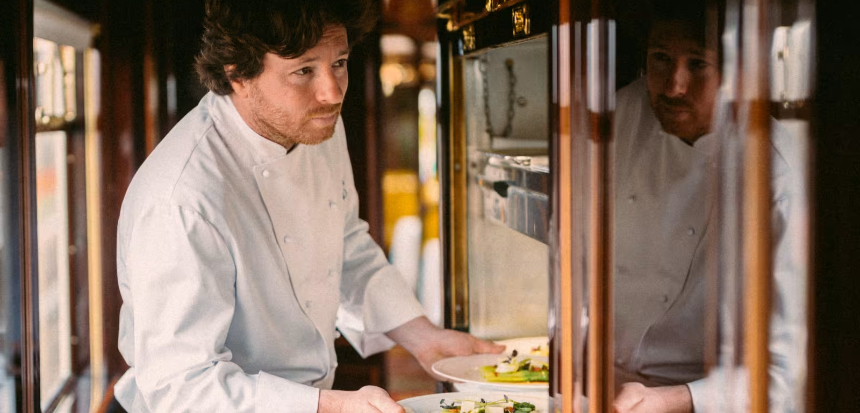
VSOE: Your steward, your suite, your rhythm - service that anticipates before you ask
The Service
Q: How does onboard service compare to a five-star hotel?
In many respects, it surpasses it - because the ratio of staff to guests is exceptional and the team knows your preferences before you board.
- Guest-to-staff ratios on most luxury trains rival the finest small hotels - on some trains approaching 1:1
- Your cabin steward is assigned to your carriage, available around the clock, handling everything from turn-down service to pressing your evening wear.
- White-glove dining service is unhurried and multi-course - a ritual, not a meal.
- The concierge experience extends off the train: excursion timings, special occasion arrangements, personal requests - all handled.
The difference between a luxury train and a luxury hotel is that a hotel requires you to travel to its beauty. On a luxury train, the beauty arrives at your window - continuously, every passing hour.
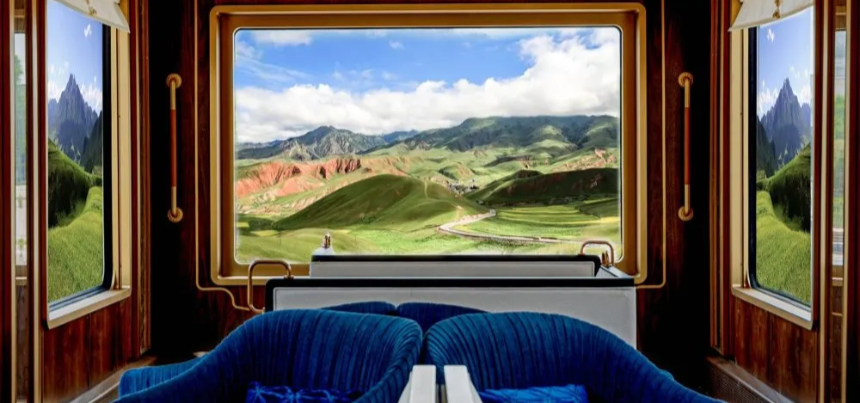
Golden Eagle: Traverses landscapes that exist nowhere else in the luxury travel world
Exclusivity and Booking
Q: What makes these journeys so exclusive?
Exclusivity is not a marketing word here - it is structural.
- Most trains depart on fixed dates, meaning there may be as few as 20 to 40 departures per year for a given journey
- Passenger numbers are kept deliberately small: the Royal Scotsman from 36 guests, the Maharajas' Express at 88, Rovos Rail's Pride of Africa at 72
- Off-train experiences are often genuinely private - a monument visit before public opening, a cultural performance arranged for the train's guests, an estate closed to independent travellers
- Certain routes - the Silk Route on the Golden Eagle, the Indian heartland on Palace on Wheels, the Australian Outback on The Ghan - are simply inaccessible by any other means of comfortable travel
✦ The rarity of these journeys is precisely what makes them so enduring as memories. You do not just book a luxury train. You secure a place in something that cannot be repeated.
Q: How far in advance should you book?
Earlier than most travellers expect. For popular trains and peak season departures, 12 to 18 months ahead is the norm. The most sought-after cabin categories - Grand Suites on the Venice Simplon-Orient-Express, Presidential Suites on the Maharajas' Express, the Royal Suites on Rovos Rail - are often taken 18 months or more in advance. Experienced travellers frequently rebook their next journey before disembarking from the current one.
If you have a specific occasion - an anniversary, a milestone birthday, a honeymoon - enquire now. Availability is finite, waitlists exist, and the best time to act is always earlier than feels necessary.
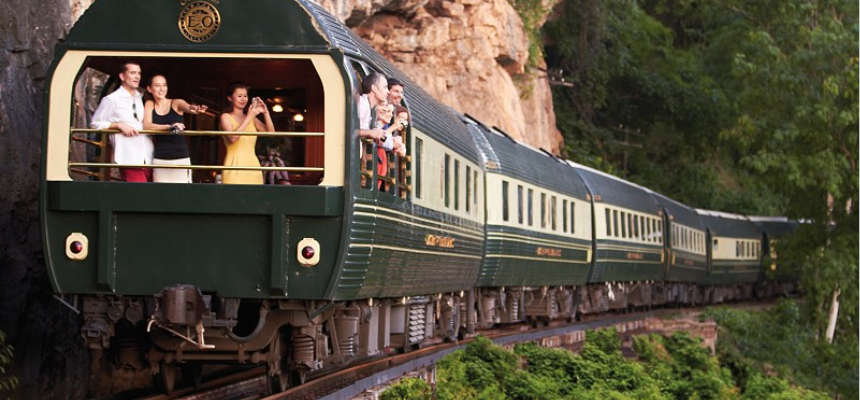
The Eastern & Oriental Express through Southeast Asia - slow travel at its most cinematic
The Nature of the Experience
Honestly? It is its own category. Like a cruise, you wake each morning to a new landscape and share the experience with a small community of fellow travellers. Like a private jet, the intimacy and curation give it a sense of occasion. Like a hotel, it is home - your suite, your steward, your rhythm.
But what a luxury train offers that none of these can replicate is the philosophy of slow travel: the conviction that the journey itself is as meaningful as the arrival. There is a particular joy in watching the world unspool through a vintage window, with nowhere to be except exactly where you are.
Q: What makes it impossible to replicate independently?
You could theoretically string together the finest hotels and restaurants along the same route. You would not come close to what a luxury train delivers:
Invisible logistics. Border crossings, customs, baggage, transfers - all managed entirely behind the scenes on trains like the Golden Eagle across the countries along the Silk Route, or the Eastern & Oriental Express through Southeast Asia
Exclusive access. Private monument visits, estate dinners, cultural performances arranged solely for the train's guests
The atmosphere. The candlelit dining car at dinner, the observation saloon as the Himalayas emerge through morning mist - this cannot be assembled from parts
The community. On a small train with 36 to 80 guests, the connections formed over shared meals and shared landscapes are quietly one of the best parts of the journey
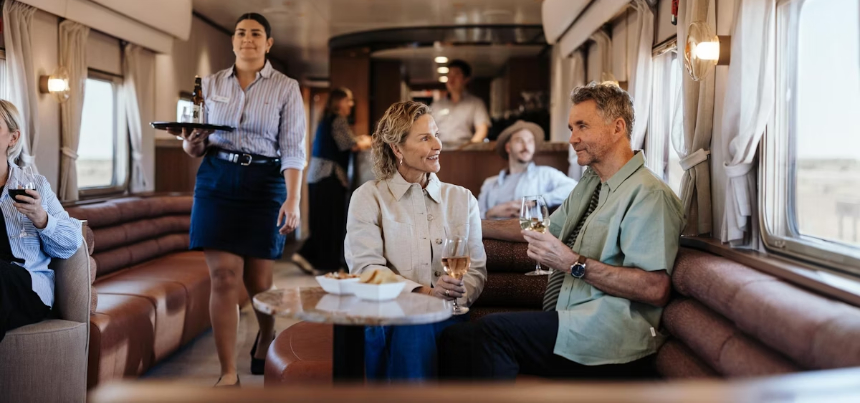
The Ghan - two thousand miles of red earth, endless sky, and not a single reason to hurry
Practical Questions
Q: Can I travel solo? Will I feel out of place?
Solo travellers are warmly and frequently welcomed aboard luxury trains - and many find it one of the most socially rewarding ways to travel.
The shared dining and social spaces on trains like the Maharajas' Express and Palace on Wheels naturally draw guests together, so no one dines alone unless they choose to. Fellow passengers tend to be interesting, well-travelled, and genuinely convivial company.
The practical caveat: single-occupancy supplements can be significant, as cabins are priced per suite. Your specialist can advise on which trains and dates offer the most favourable solo pricing, and whether smaller or larger cabin categories are the smarter choice.
Q: What is the ideal journey duration?
- 2 – 3 nights: An excellent first introduction. The Maharajas' Express short itineraries and The Blue Train's Pretoria–Cape Town journey are ideal starting points - enough to fully experience the service and atmosphere.
- 4 – 7 nights: The sweet spot for most travellers. India's Palace on Wheels (7 nights) and Deccan Odyssey, the Eastern & Oriental Express (3–4 nights), and Rovos Rail's shorter journeys deliver the full arc of the experience across multiple destinations.
- 8 nights and beyond: For the immersive expedition traveller. The Golden Eagle Jewels of the Silk Road, Rovos Rail's Cape Town to Dar es Salaam, and The Ghan across Australia offer a different dimension entirely - these are journeys that recalibrate your sense of distance and time
- First-time luxury train travellers often book shorter initially - then extend significantly on their next booking.
Q: What are the dress codes? Are there formal nights?
Dress codes are part of the experience and vary by train, but the general pattern is:
- Daytime - smart casual. Comfortable but considered. Shorts and sandals are typically not appropriate in restaurants or public cars
- Evenings - smart dress. Collared shirts and trousers for gentlemen; smart dresses or equivalent for ladies
- Formal nights - many trains feature one or more black-tie evenings. Dressing for dinner on a moving train is one of travel's great rituals - embrace it
Trains in warmer climates, such as the Golden Chariot through South India or the Hiram Bingham to Machu Picchu, tend toward a more relaxed smart-casual interpretation throughout.
✦ A note on packing: most trains suggest one medium suitcase per person. The act of choosing what to wear for dinner on the Orient-Express or the Maharajas' Express is itself part of the pleasure. Pack something you love.
Q: What about motion sickness?
Luxury trains are among the smoothest rides in rail travel - well-maintained tracks, unhurried speeds, and shock-absorbing carriages make the motion far gentler than most people anticipate. Many guests who are cautious about sea sickness find train travel entirely comfortable.
That said, if you have concerns, standard motion sickness medication works well and is worth packing. Your cabin steward can also advise on the smoothest times to visit the dining car - typically away from mountain curves and junctions. For most guests, any mild motion becomes part of the pleasant rhythm of the journey within the first few hours.
Q: Can children travel? What age is appropriate?
Most luxury trains welcome children, but the experience is designed primarily for adults - and the suitability depends heavily on your child's temperament and the specific train.
- India's Palace on Wheels and the Golden Chariot are among the more family-friendly options, with itineraries including wildlife, temples, and markets that engage younger travellers
- The Maharajas' Express and VSOE are more atmosphere-led - older teenagers who appreciate history, design, and fine dining will thrive; younger children may find the pace and formality challenging
- Some trains have minimum age requirements or restrict certain cabin categories for family use - check specific policies with our luxury travel specialists
Multi-generational bookings of a shared family suite or adjacent cabins are increasingly popular for milestone occasions. With the right planning, it can be a transformative shared memory.
Q: What is the Wi-Fi and connectivity situation?
On most heritage and long-distance luxury trains, Wi-Fi is either limited or not available - and this is, genuinely, part of the point.
Trains like the Venice Simplon-Orient-Express, Rovos Rail, and The Royal Scotsman are intentionally low-connectivity environments. This is not a shortcoming to be apologised for; it is a considered feature of the slow-travel philosophy. Guests find - often to their surprise - that disconnecting is one of the most valuable things the journey gives them.
Some more modern trains, including the Rocky Mountaineer and certain Indian trains like Palace On Wheels, offer better connectivity. If staying online is essential for work reasons, our specilists can advise on the best options and cellular coverage along specific routes.
Q: Is there a doctor onboard? Are trains accessible for guests with mobility needs?
Most luxury trains carry a trained first-aider among the crew; longer or more remote journeys often include a qualified nurse or doctor. Emergency assistance can always be arranged at scheduled stops. Comprehensive travel insurance with medical evacuation cover is strongly advised, especially for remote routes.
Accessibility is a genuine consideration. Heritage trains - narrow corridors, steps between carriages, compact cabins - present real challenges for wheelchair users or guests with significant mobility restrictions. Some modern trains have made meaningful adaptations. If this applies to you or a travelling companion, raise it early: our specialists can identify the most suitable train, the best cabin placement, and any advance arrangements the train's team can make. The goal is always to find a way to make the journey possible - and comfortable.
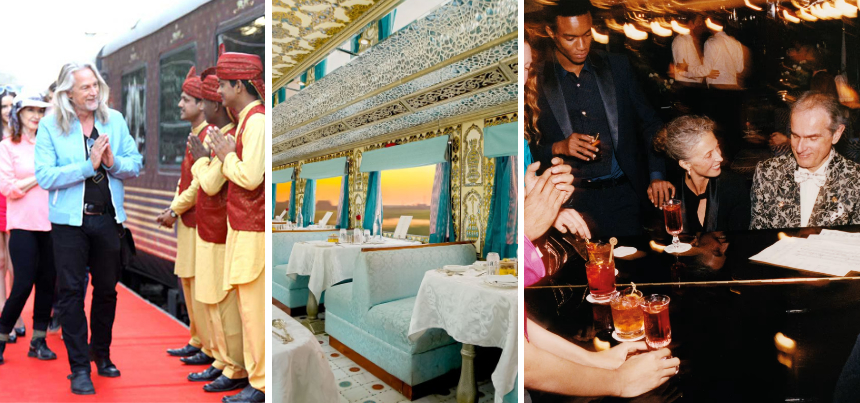
The journey of a lifetime takes many forms
Which Train Is Right for You?
The trains we work with span the world - from India's royal heartland to the African wilderness, from the European Golden Age to the Australian Outback. Here is a quick reference to help orient your thinking:
| Train |
Region |
Best For |
Journey Length |
| Maharajas' Express |
India |
Heritage, culture, pan-India |
5 – 8 nights |
| Palace on Wheels |
India |
Rajasthan royalty, first-timer |
7 nights |
| Deccan Odyssey |
India |
Western India, Ajanta & Ellora |
7 nights |
| The Golden Chariot |
India |
South India, temple circuits |
3 – 7 nights |
| Venice Simplon-Orient-Express |
Europe |
Art Deco romance, iconic routes |
1 – 3 nights |
| Rovos Rail |
Africa |
Wilderness grandeur, long-haul |
2 – 15 nights |
| The Blue Train |
Africa |
Classic South Africa, short luxury |
2 nights |
| The Royal Scotsman |
Europe |
Scotland landscapes, intimate |
2 – 7 nights |
| Golden Eagle |
Asia |
Trans-Siberian, Silk Road expedition |
7 – 19 nights |
| Eastern & Oriental Express |
Asia |
Southeast Asia, colonial charm |
3 – 4 nights |
| Rocky Mountaineer |
North America |
Canadian Rockies, day journeys |
2 – 3 days |
| Hiram Bingham |
South America |
Machu Picchu day journey |
Day trip |
| The Ghan / Indian Pacific |
Australia |
Outback epic, vast landscapes |
2 – 4 nights |
This is a starting point, not a definitive guide. The right train depends on what you are celebrating, who you are travelling with, how much time you have, and what kind of landscape moves you. That is the conversation we love having.
Is It Worth It?
For the right person, at the right time, with the right companion - it is not simply worth it. It is transformative. A luxury train journey is not a holiday. It is a milestone. The kind that divides your travel story into before and after. The kind your children will hear about.
Years from now, you will remember the sound of the wheels on the track in the dark, the candlelight catching the crystal, the mountains emerging from the morning mist - with the startling clarity of something that mattered.
If you are asking whether it is worth it, the answer is almost certainly yes. What remains is simply the question of which journey - and when
Tell us the occasion, and we'll match you with the journey that will define it.
luxurytrains.in | +91-20 66442929 | info@luxurytrains.in